
ERC Congress - Resuscitation 2025
23 - 25 October, Rotterdam, Netherlands
|

 Tap once on poster to enlarge
 List view

 |
|
|
|
|
|
 P-435 P-435 |
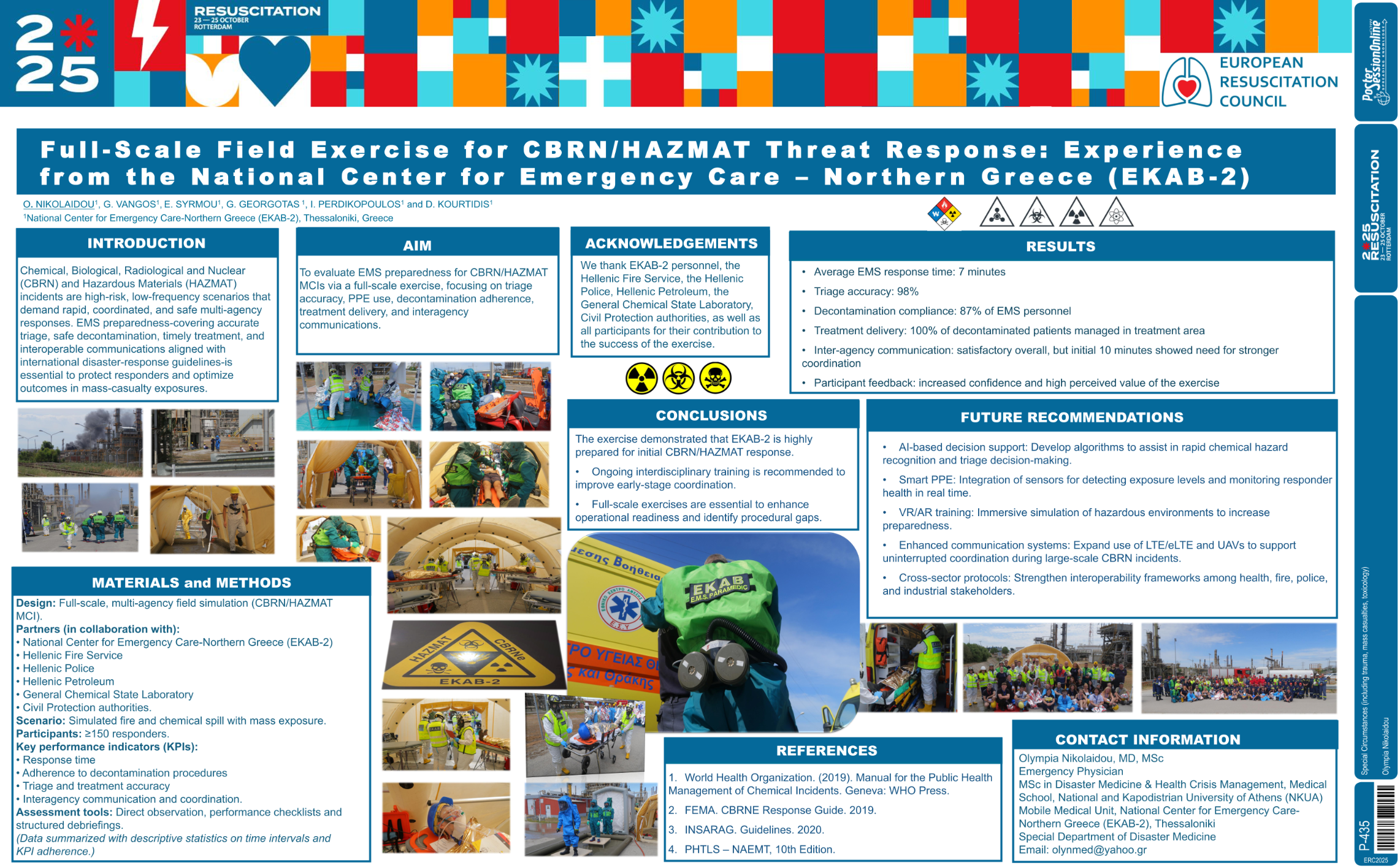
Full-Scale Field Exercise for CBRN/HAZMA.. | Olympia Nikolaidou .. | Georgios Vangos, Efstratia Syr.. | Special Circumstances (including trauma,.. | - - |
| P-436 |
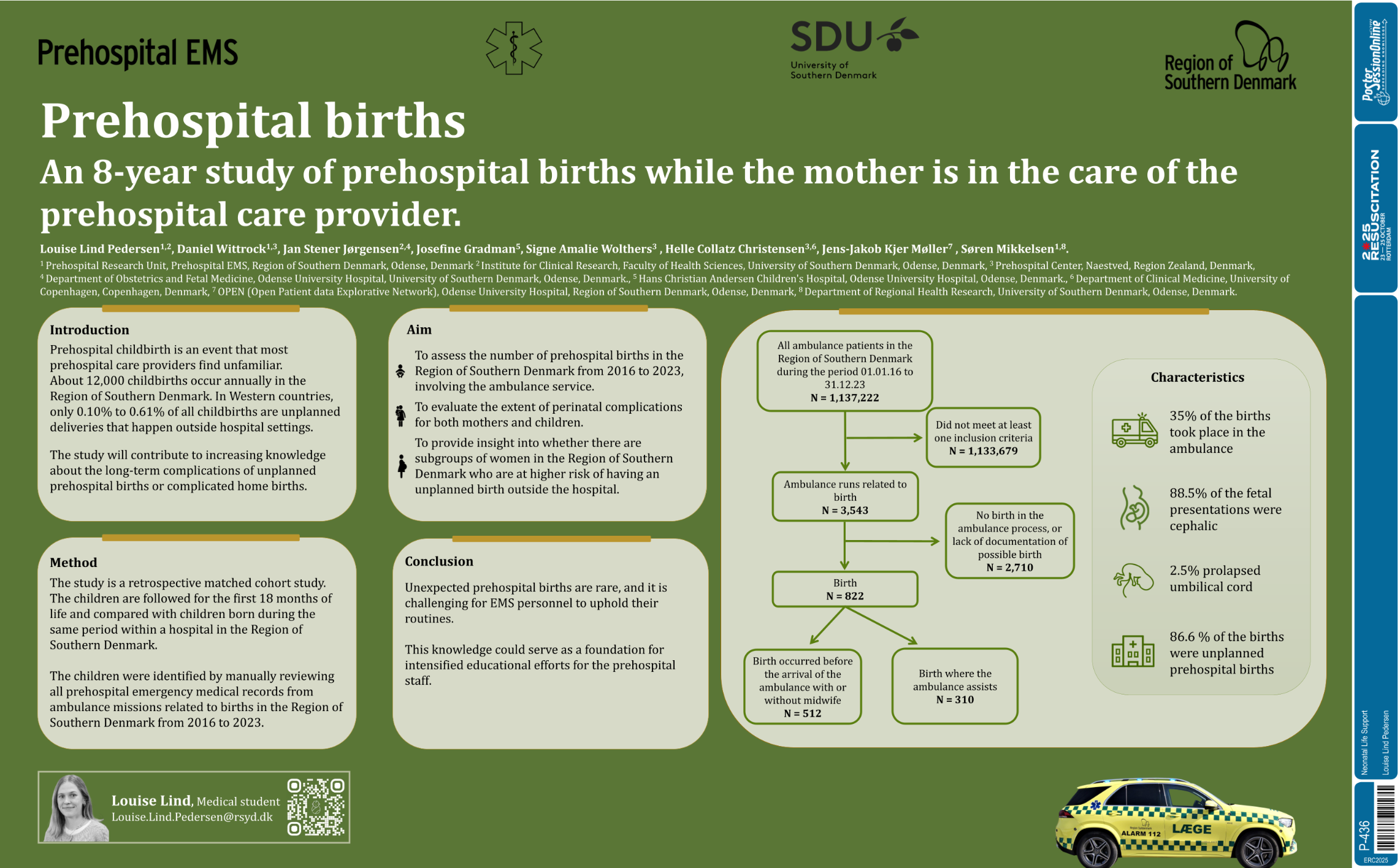
Prehospital births. An 8-year study of p.. | Louise Lind Pedersen .. | .. | Neonatal Life Support.. | - - |
| P-439 |
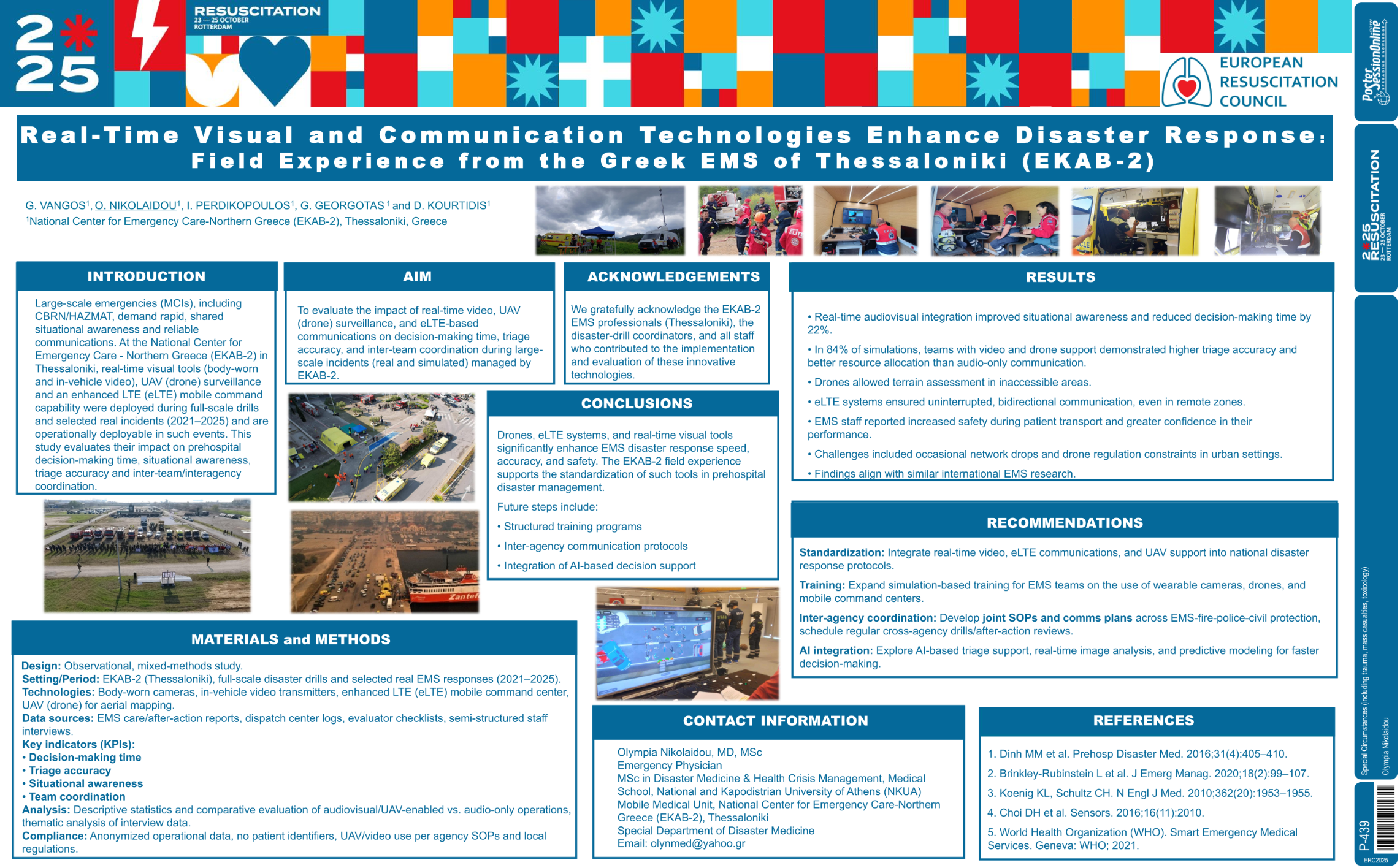
Real-Time Visual and Communication Techn.. | Olympia Nikolaidou .. | Georgios Vangos, Iordanis Perd.. | Special Circumstances (including trauma,.. | - - |
| P-440 |
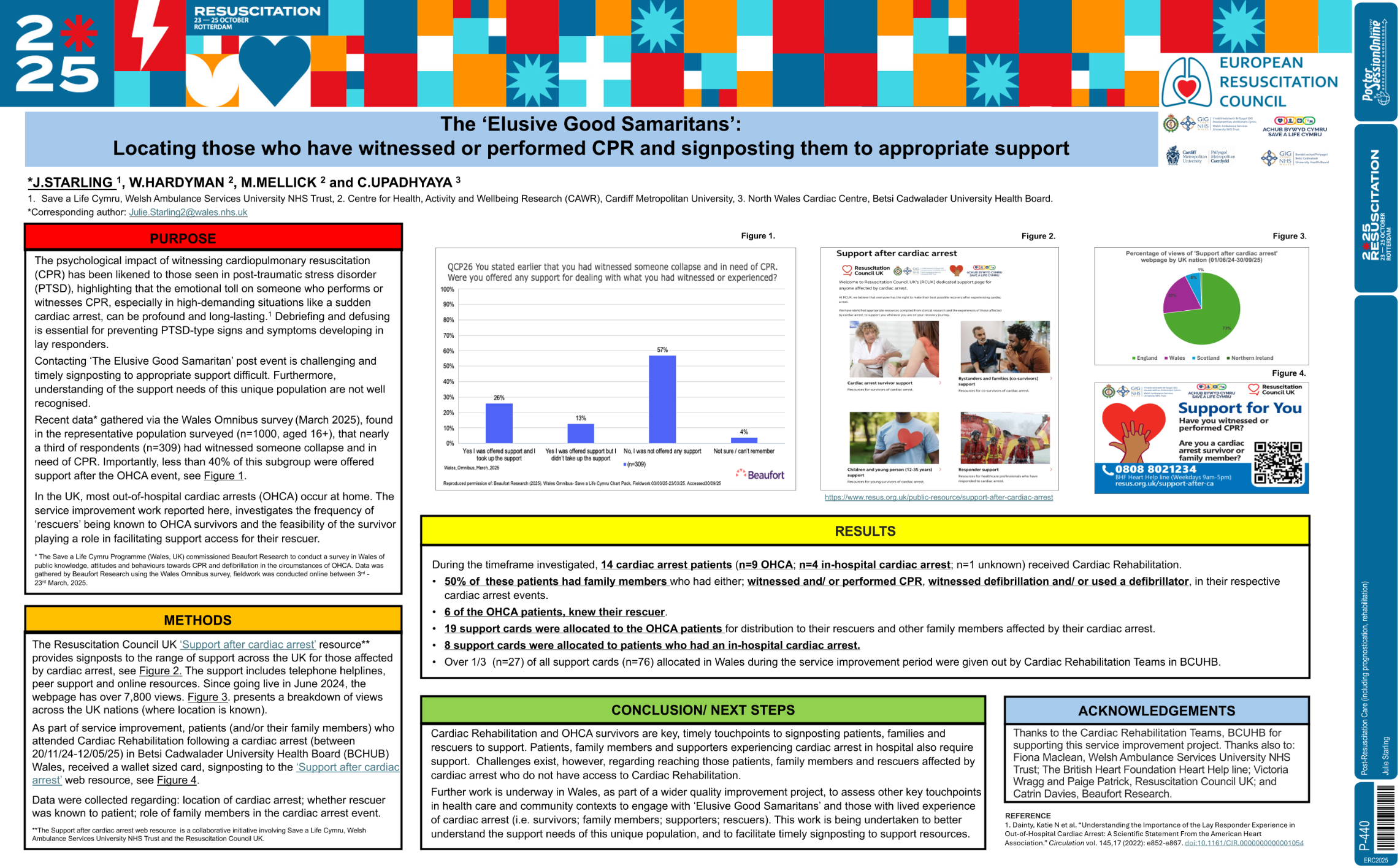
The ´Elusive Good Samaritans´: Locating.. | Julie Starling .. | Wendy HardymanMikel MellickChe.. | Post-Resuscitation Care (including progn.. | - - |
| P-441 |
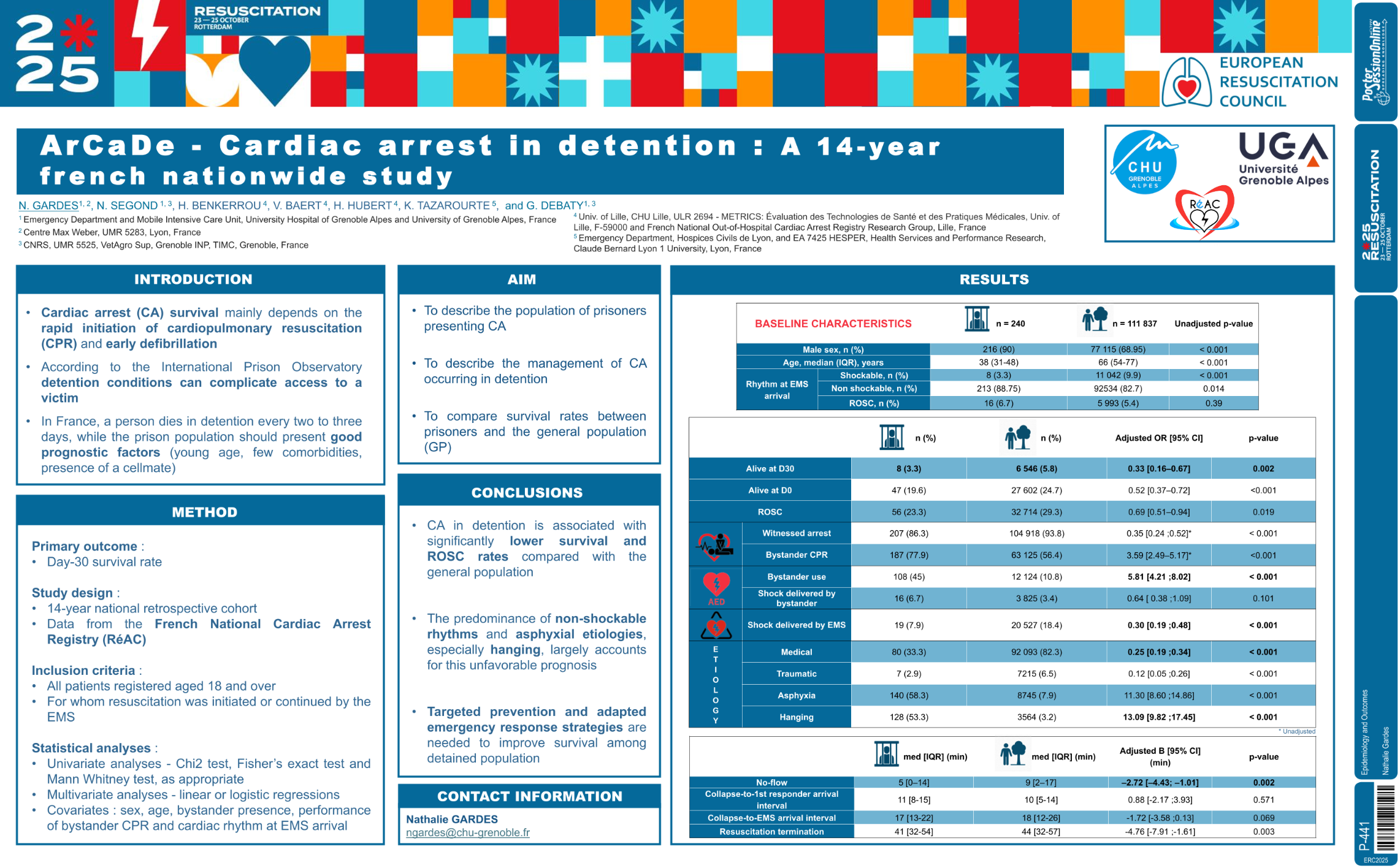
Cardiac arrest in detention : A 14-year .. | Nathalie Gardes .. | .. | Epidemiology and Outcomes.. | - - |
| P-442 |
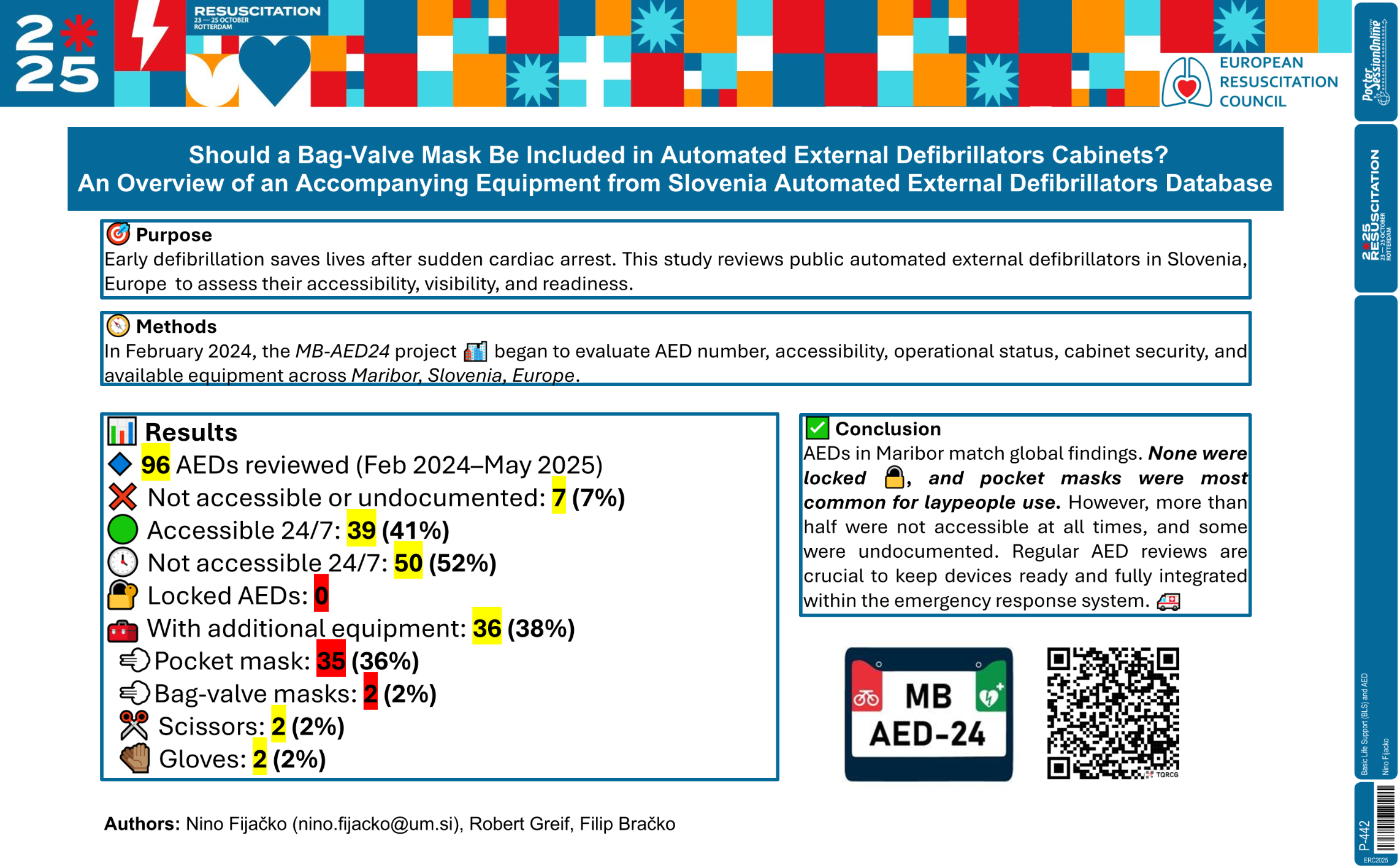
Should a Bag-Valve Mask Be Included in A.. | Nino Fijacko .. | .. | Basic Life Support (BLS) and AED.. | - - |
| P-443 |
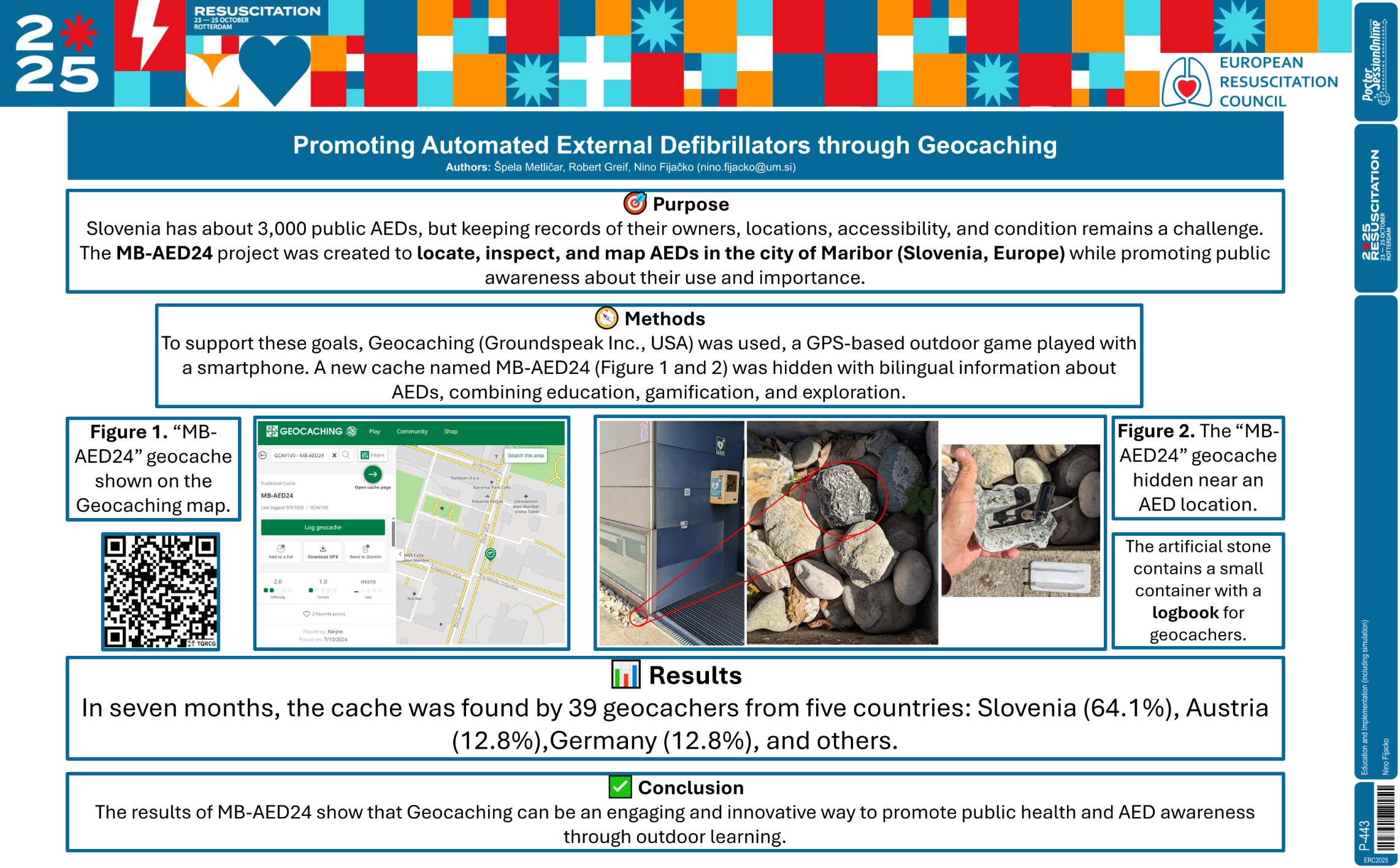
Promoting Automated External Defibrillat.. | Nino Fijacko .. | pela Metli&269;ar, Robert Grei.. | Education and Implementation (including .. | - - |
| P-444 |
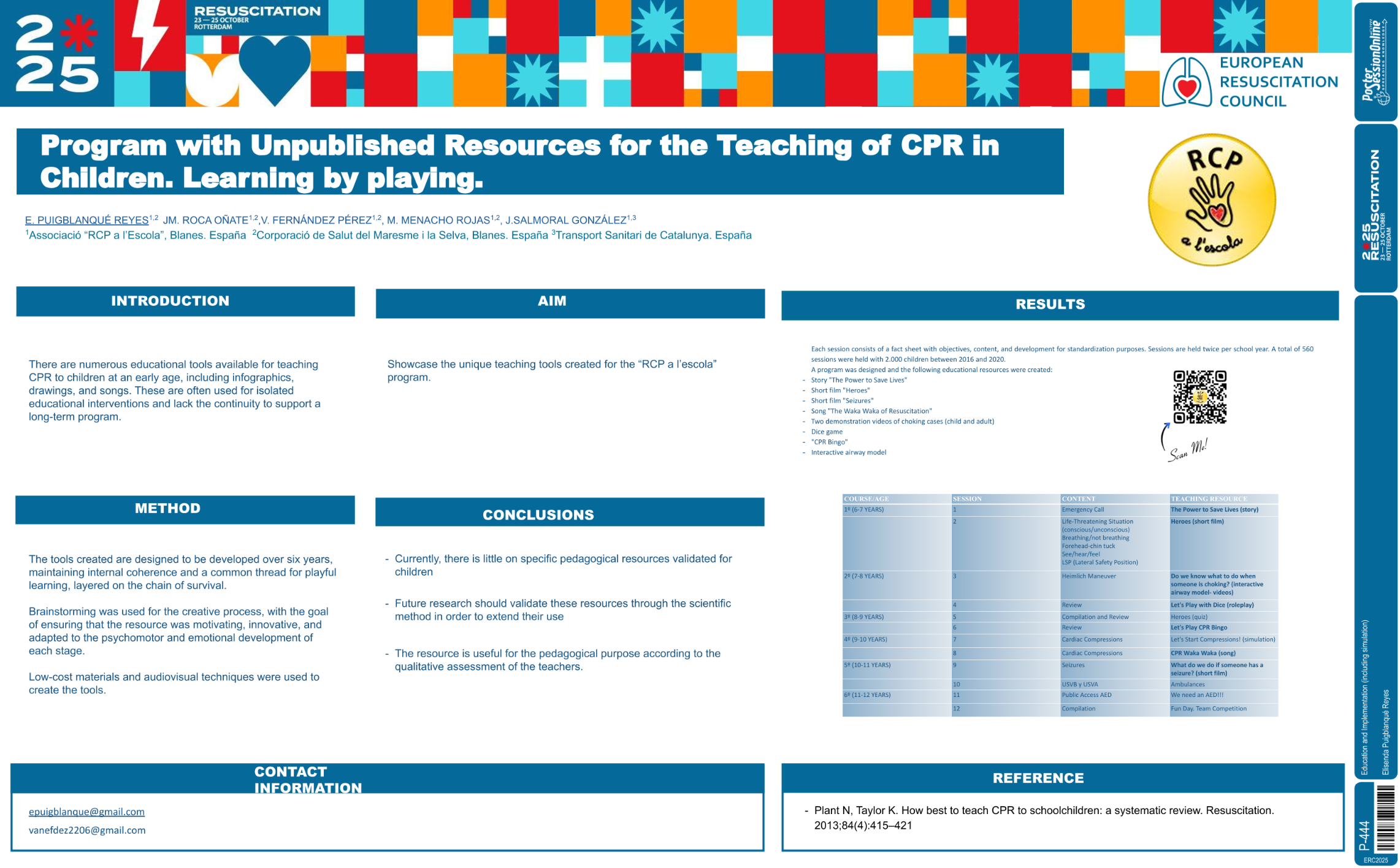
Program with Unpublished Pedagogical Res.. | Elisenda Puigblanqué Reyes .. | Juana María Roca Oñate, Vaness.. | Education and Implementation (including .. | - - |
| P-445 |
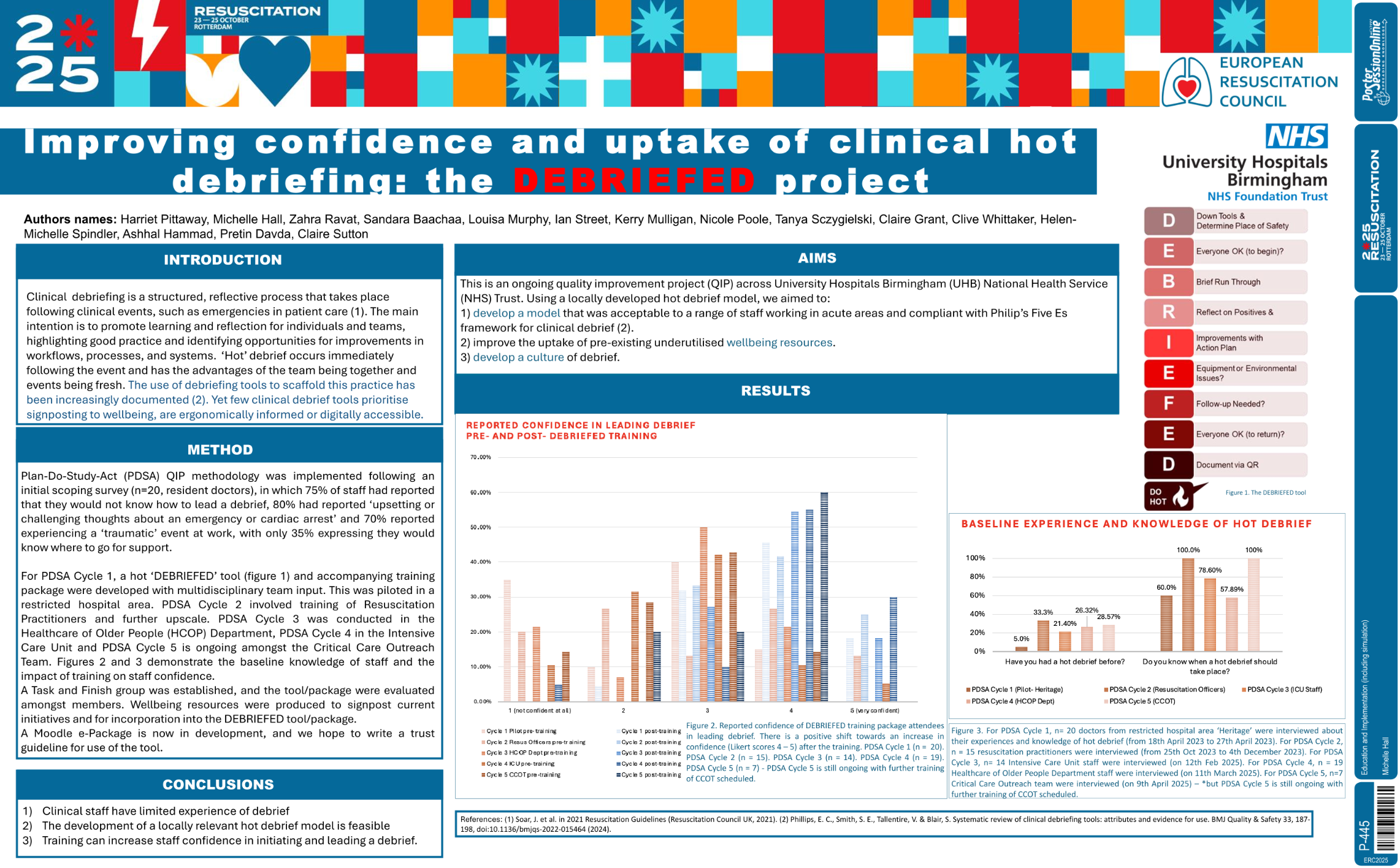
A Person-Centric, Digitally Inspired, Ho.. | Michelle Hall .. | Harriet Pittaway, Michelle Hal.. | Education and Implementation (including .. | - - |
| P-446 |
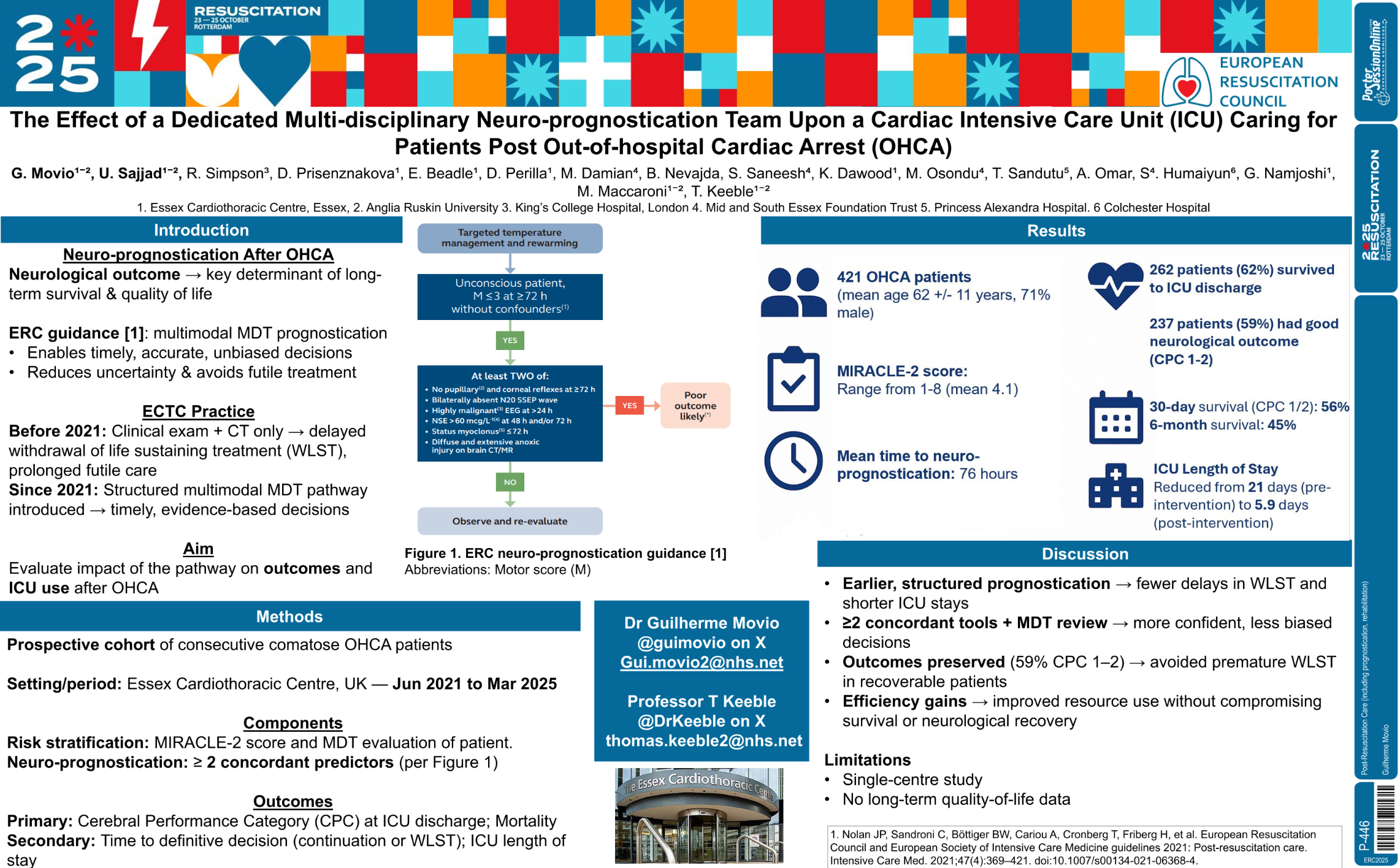
The effect of a dedicated multi-discipli.. | Guilherme Movio .. | G. Movio&8315;, U. Sajjad&8315.. | Post-Resuscitation Care (including progn.. | - - |
| P-447 |
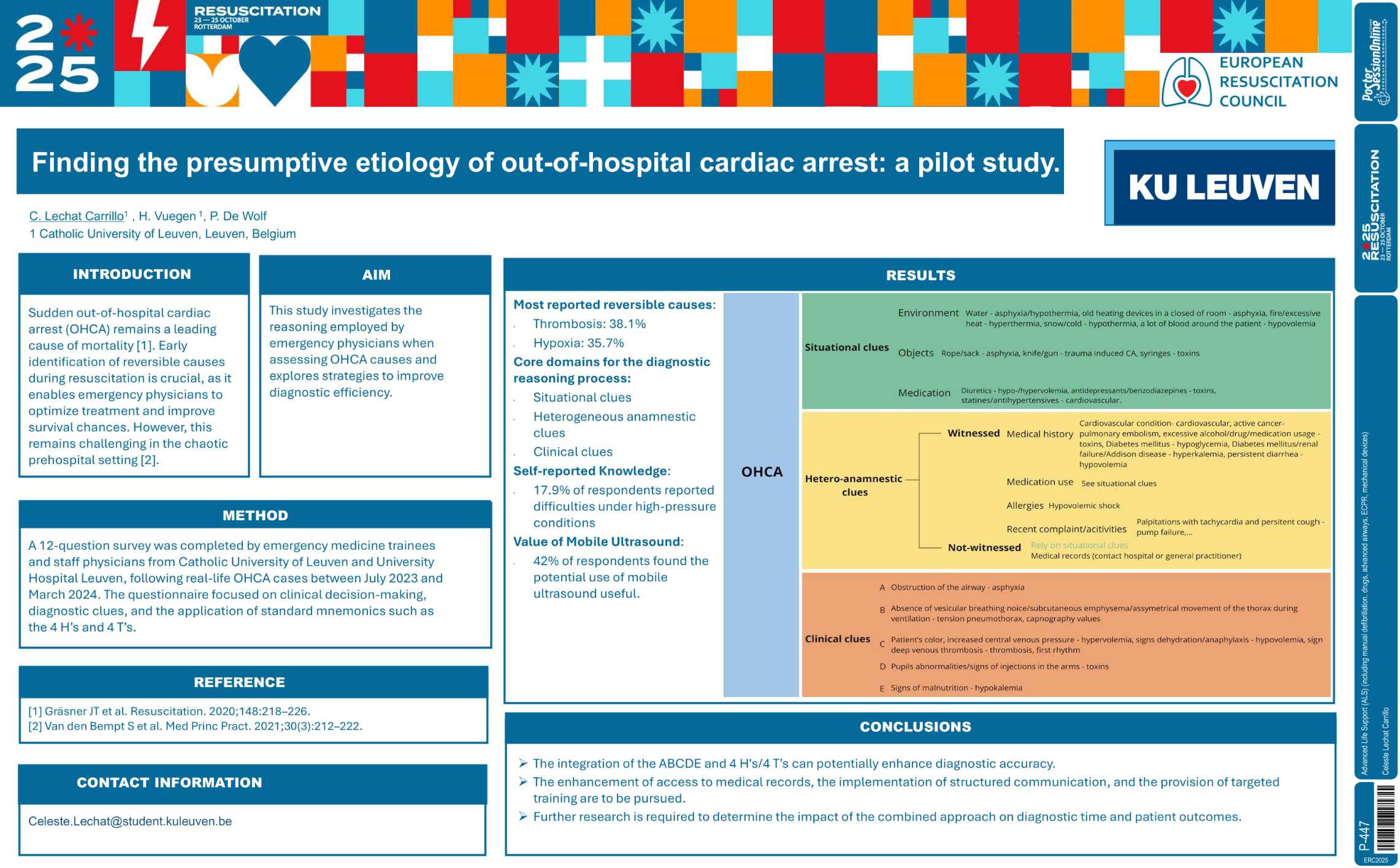
Finding the presumptive etiology of out-.. | Celeste Lechat Carrillo .. | Hannah VuegenPhilippe De Wolf.. | Advanced Life Support (ALS) (including m.. | - - |
| P-448 |
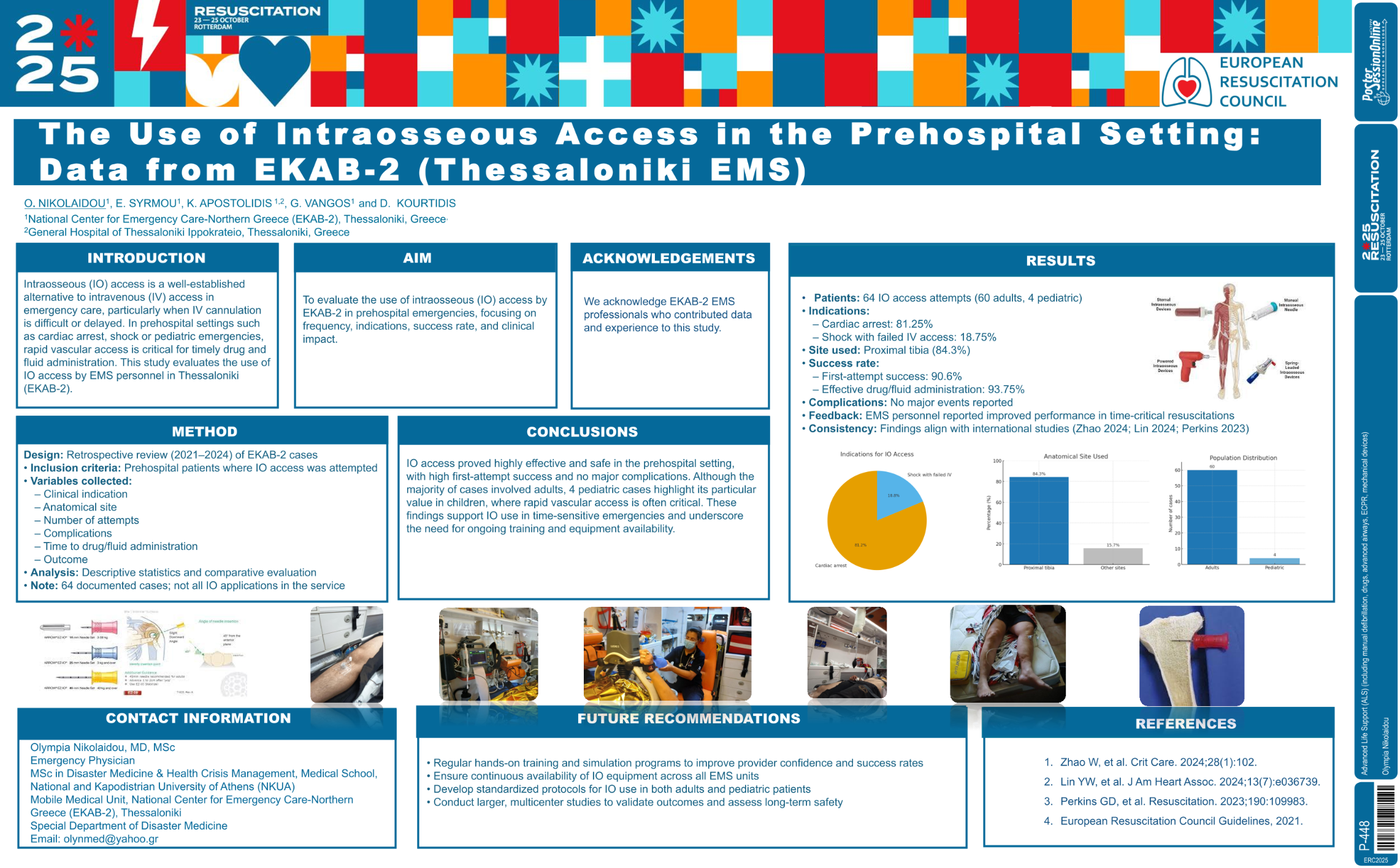
The Use of Intraosseous Access in the Pr.. | Olympia Nikolaidou .. | Efstratia Syrmou, Kyriakos Apo.. | Advanced Life Support (ALS) (including m.. | - - |
| P-449 |
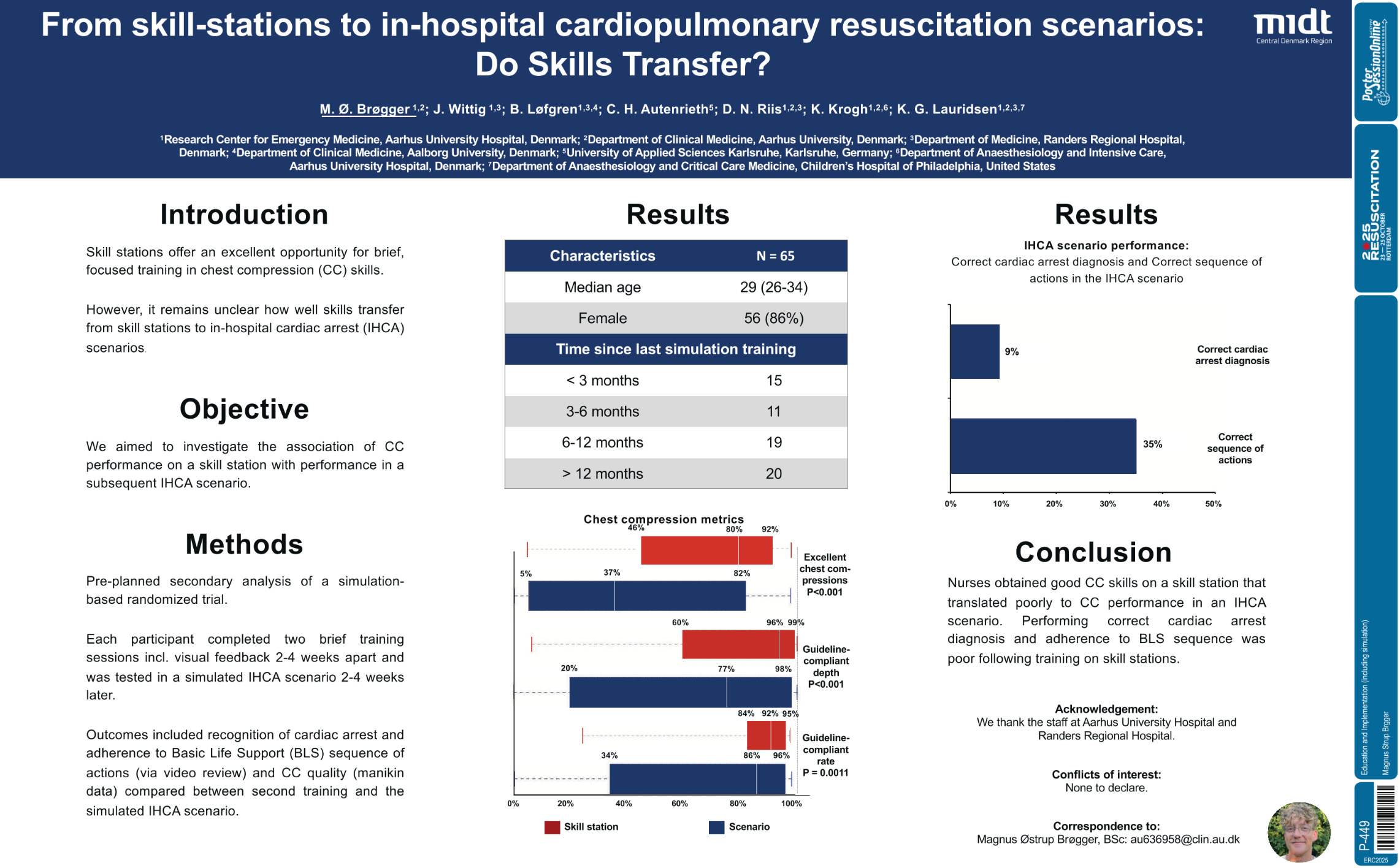
From skill-stations to in-hospital cardi.. | Magnus strup Brgger .. | .. | Education and Implementation (including .. | - - |
| P-451 |
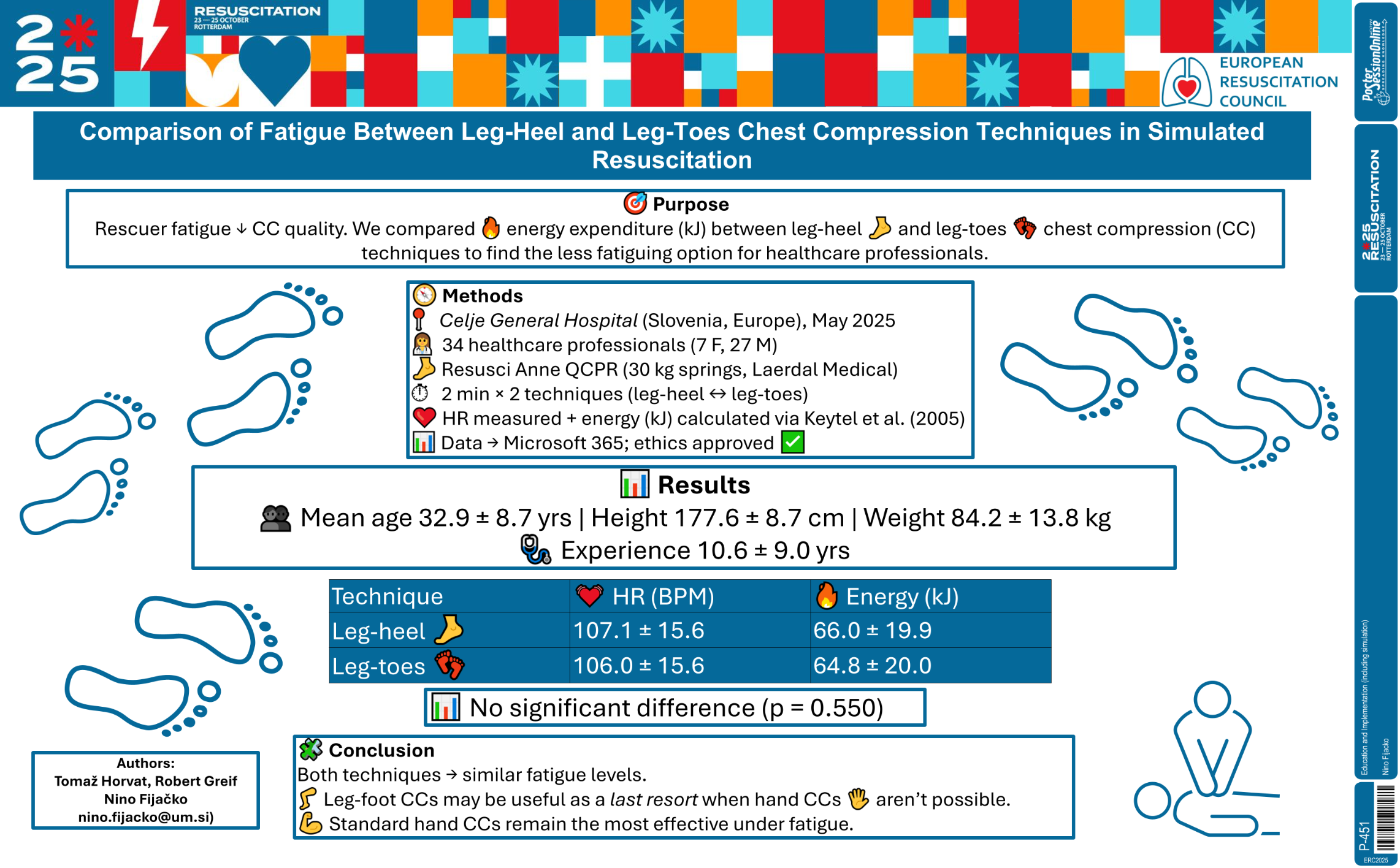
Comparison of Fatigue Between Leg-Heel a.. | Nino Fijacko .. | .. | Education and Implementation (including .. | - - |
| P-452 |
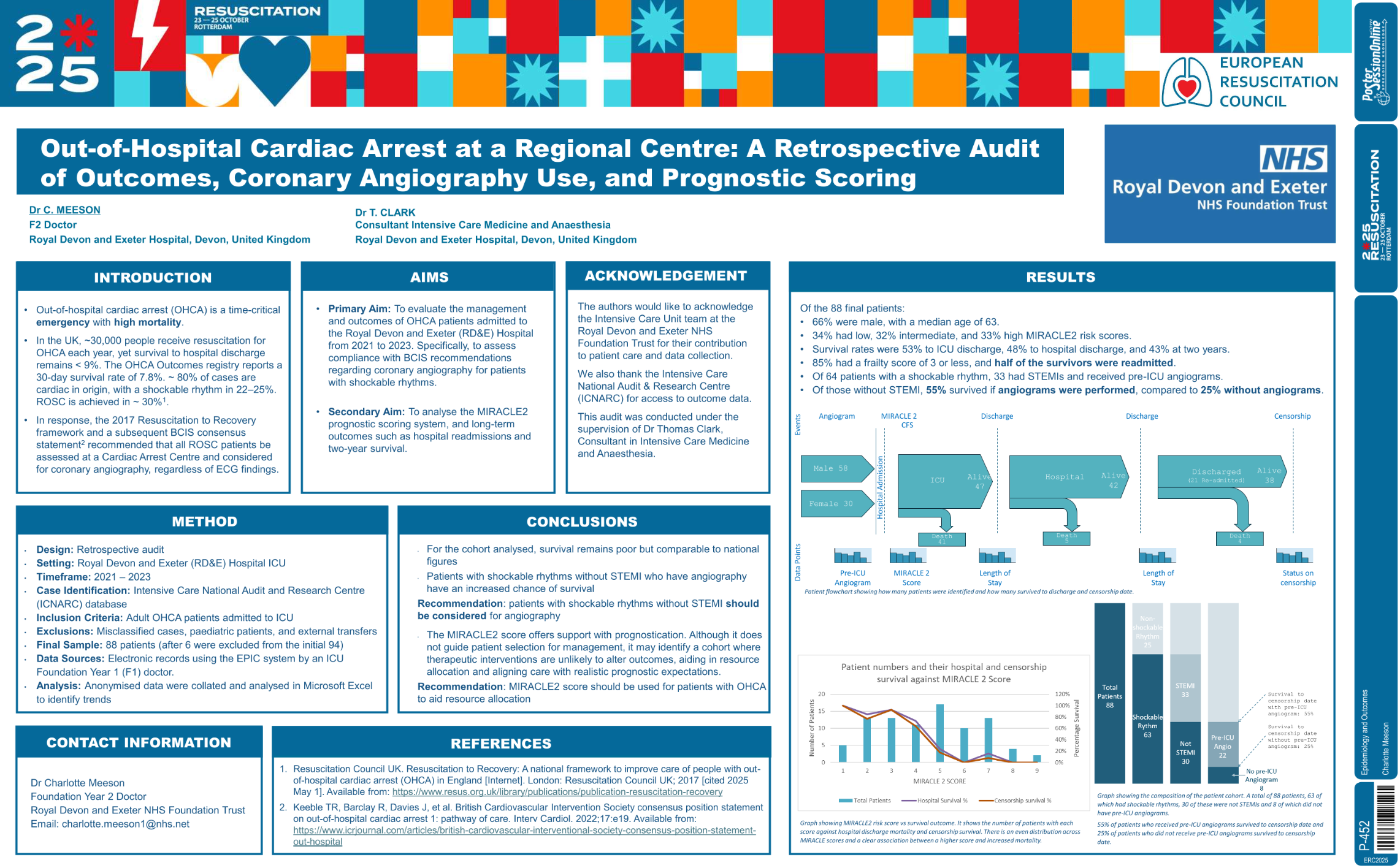
Out-of-Hospital Cardiac Arrest at a Regi.. | Charlotte Meeson .. | .. | Epidemiology and Outcomes.. | - - |
| P-454 |
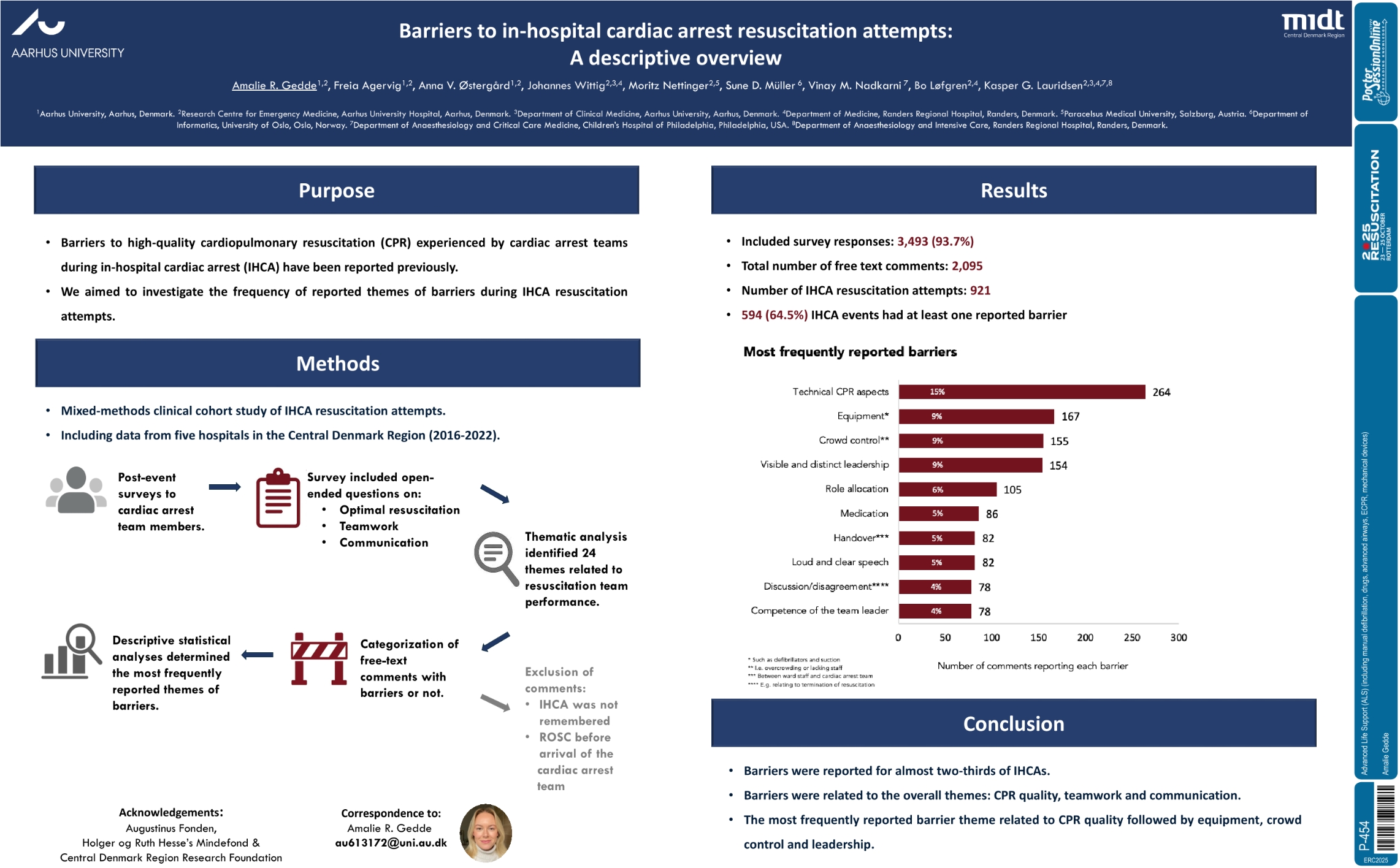
Barriers to in-hospital cardiac arrest r.. | Amalie Gedde .. | Freia Agervig, Anna V. stergrd.. | Advanced Life Support (ALS) (including m.. | - - |
| P-456 |
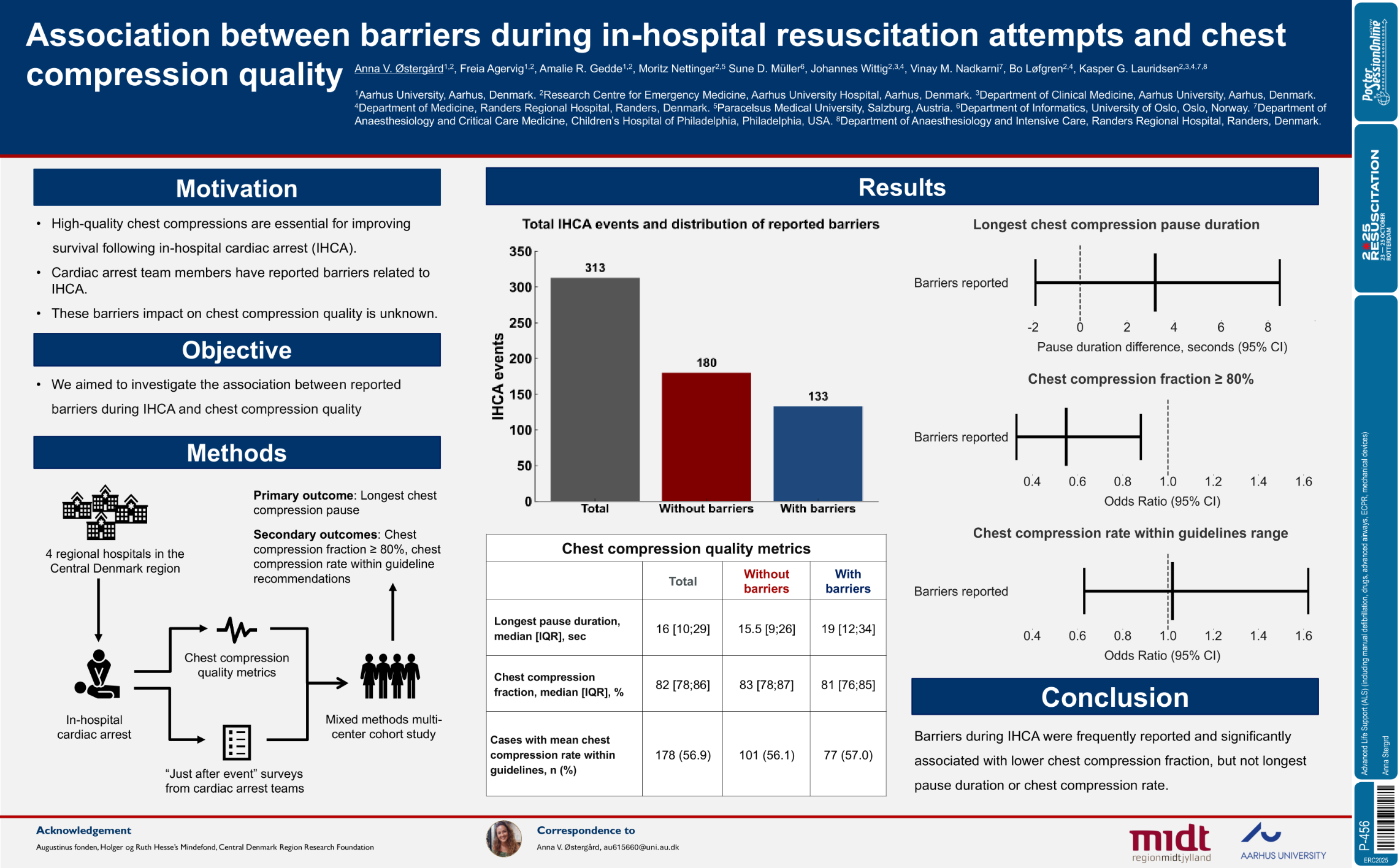
Association between barriers during in-h.. | Anna stergrd .. | .. | Advanced Life Support (ALS) (including m.. | - - |
| P-457 |
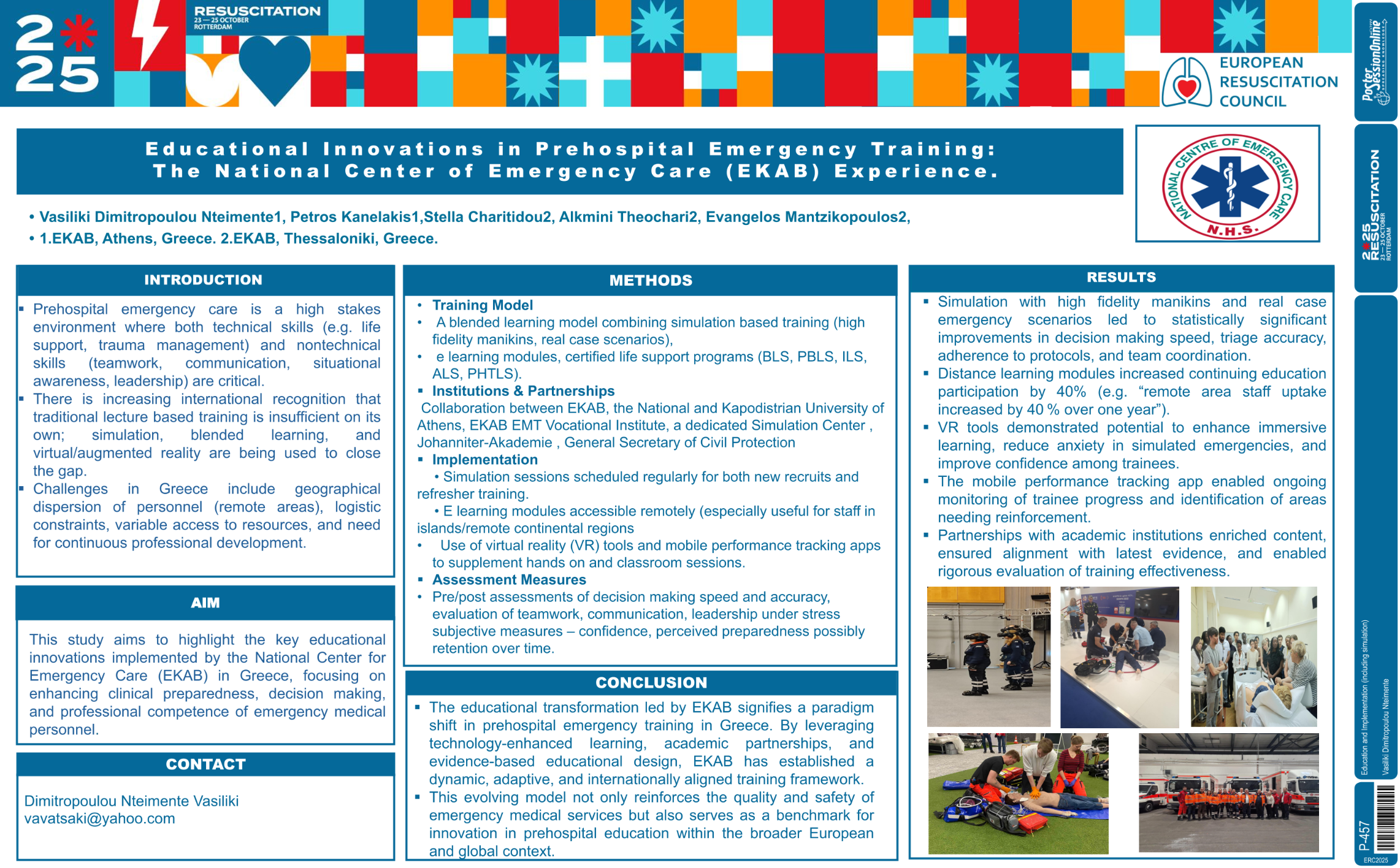
Educational Innovations in Prehospital E.. | Vasiliki Dimitropoulou Nteimente .. | .. | Education and Implementation (including .. | - - |
| P-458 |
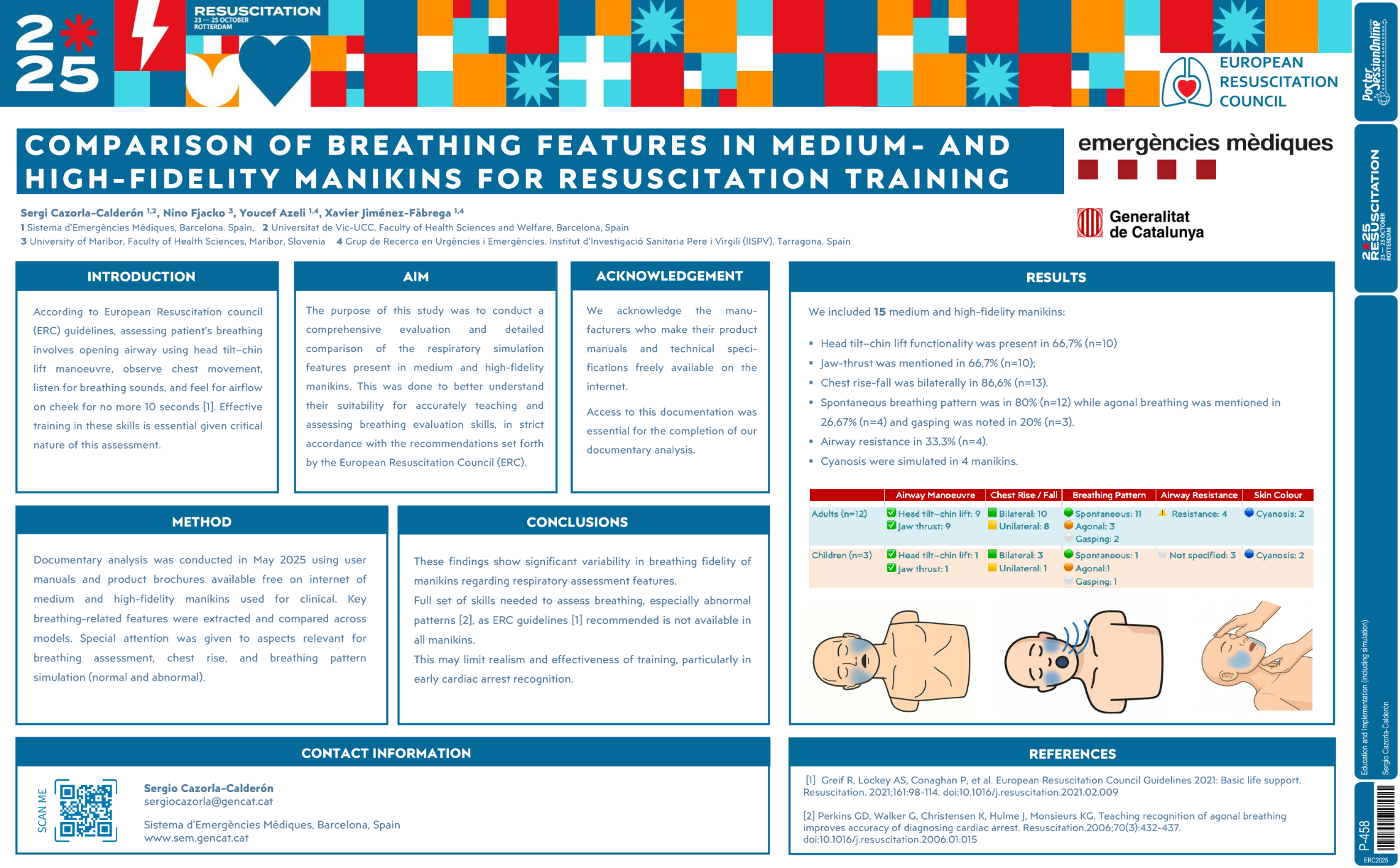
Comparison of Breathing Features in Medi.. | Sergio Cazorla-Calderón .. | .. | Education and Implementation (including .. | - - |
| P-459 |
Advanced directives in out of hospital c.. | Dennis Rupp .. | Christian Volberg, Martin Chri.. | Ethics in Resuscitation.. | - - |


Abstract
Thunderstorm-related asthma in patients sensitised to olea europaea pollen: twenty emergency department visits for asthmatic symptoms in one single day Losappio, Laura1; Heffler, Enrico2; Falco, Antonio1; Contento, Francesco1; Cannito, Cosimo1; Rolla, Giovanni2 1"Dimiccoli" Hospital, Emergency Department, Barletta, Italy; 2University of Torino - AO Mauriziano "Umberto I", Allergy and Clinical Immunology, Torino, Italy
Background: Associations between thunderstorm and asthma morbidity have been reported in several countries. Common to all epidemics of thunderstorm-related asthma is a significant increase in atmospheric allergen load during and immediately after a thunderstorm. Sensitization to Alternaria species or to grass and parietaria pollens has been suggested to play a key role in thunderstorm-related asthma. The only reported event of thunderstorm-related asthma in Mediterranean area was attributed to sensitization to parietaria pollen.
Method: here we describe a series of 20 patients who presented to Emergency Department in Barletta (94,000 inhabitants), Puglia (Italy) for sudden and severe asthmatic symptoms between May 27th and 28th 2010 (from15:36 to 5:02), immediately after a violent thunderstorm which occurred following a very hot morning (mean temperature: 29°C). All the patients have been subsequently visited by an allergist and underwent allergological work-up which included skin prick tests and a careful clinical history. Local pollen counts were available.
Result: Between May 10th and June 10th 2010, 86 Emergency Department asthma visits were recorded, 20 of them during the study day. Patients' mean age was 44.25 +/- 18.5 years (range: 9-81), 8/20 females, 2 smokers, 16 with a previous history of known respiratory allergy. Only two patients regularly took anti-asthma drugs. All 20 patients were sensitized to Olea europaea pollen, 7 of whom were monosensitized. Ten patients were sensitized to grass, 7 to parietaria, 5 to compositae, 5 to cypress, 5 to house dust mites, 3 to dog and 1 to cat danders. No patient was sensitized to Alternaria. Mean pollen count was 17 granules/m3 for Olea europaea, 6 granules/m3 for grass pollen.
Conclusion: This is, in our knowledge, the second epidemic of thunderstorm related asthma described in Mediterranean area and the first one in which sensitization to Olea europaea played a key-role. In conclusion, our report indicates that thunderstorm asthma may involve different allergens (not only fungal spores and grass or parietaria pollen) in different geographic areas, depending on the seasonality of thunderstorms and allergenic pollen.